

Age-related macular degeneration (AMD) is one of the leading causes of central vision loss in people over 50. Dr. Rebecca Sparks at Sparks Eye Care monitors macular health over time, catches early changes before they affect daily vision, and co-manages wet AMD with retinal specialists when treatment is needed. Many patients in her practice have been in the monitoring window for years.
Macular Degeneration Care in Andover, Kansas
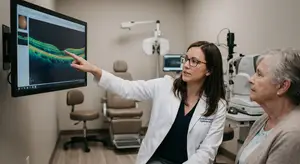

What Macular Degeneration Is, in Plain Terms
The macula is the small central part of the retina responsible for sharp, detailed vision. AMD causes the tissue in this area to thin, accumulate deposits (called drusen), or develop abnormal blood vessels over time.
There are two main forms:
- Dry AMD: The more common form. It develops slowly as the macula thins and small drusen deposits build up. Vision loss is usually gradual. There is no cure, but nutritional supplements (AREDS2 formula) can slow progression in intermediate stages.
- Wet AMD: Less common but more serious. Abnormal blood vessels grow under the retina and can leak or bleed, causing faster and more significant vision loss. Wet AMD is treatable with injections into the eye (anti-VEGF therapy), and outcomes are much better when treatment starts early.
Most people start with dry AMD. A small percentage convert to wet over time. That is why ongoing monitoring matters.
How AMD Is Monitored Over Time
- Annual dilated retinal exams to track any changes in the macula.
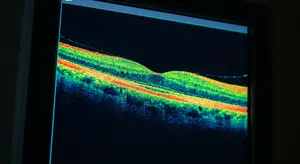
- OCT imaging for detailed cross-sectional views of the retinal layers.
- Amsler grid checks at home to watch for new distortions between visits.
- Comparison against your baseline images from prior years.
- If you notice new distortion or blurring in your central vision, call us rather than waiting for your next scheduled visit.
- Sudden changes on the Amsler grid warrant a prompt call.
- Our Andover eye doctor will tell you clearly what stage you are at and what the monitoring plan is.
- Having years of baseline imaging makes early conversion to wet AMD much easier to detect.

Co-Management for Wet AMD
When Dr. Sparks identifies signs of wet AMD or progression that warrants treatment, she works closely with a retinal specialist to coordinate care. She handles the monitoring, manages the relationship with the specialist, and keeps you informed at every step. You do not need to navigate that process on your own. Most patients with wet AMD who are treated early maintain functional central vision for many years.
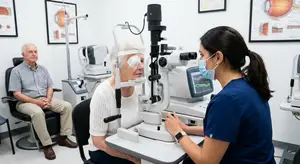
OCT Imaging and Retinal Monitoring
OCT imaging maps the retinal layers in fine detail, which is how dry AMD progression and the early signs of wet AMD show up. Year-over-year comparison of these images is how Dr. Sparks tracks changes that would otherwise be invisible until they affect your vision.

Home Monitoring With the Amsler Grid
The Amsler grid is a simple home monitoring tool: a grid of straight lines with a central dot. If any lines appear wavy, blurry, or missing, that is a signal worth a call to the eye clinic. Dr. Sparks will show you how to use it properly and how often to check.
Lifestyle Factors That Affect AMD Risk
AMD risk is partly genetic, but several modifiable factors affect how quickly it progresses:
- Smoking: the single largest modifiable risk factor. Smokers develop AMD at twice the rate of non-smokers. Quitting at any age reduces risk.
- Diet: Leafy greens, fish rich in omega-3 fatty acids, and antioxidant-rich foods support retinal health. The AREDS2 supplement formula is recommended for intermediate or late AMD in one eye.
- UV exposure: Sunglasses with UV protection reduce cumulative light damage to the macula. This is a long-term habit worth building.
- Blood pressure control: Chronic high blood pressure is associated with increased AMD risk and faster progression.
Our Andover eye doctor will review your personal risk profile and give you practical guidance at your visit, not a generic checklist.

Related Services at Sparks Eye Care
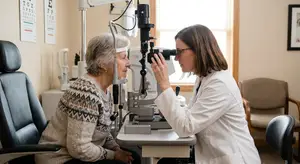
Annual comprehensive exams are how Dr. Sparks builds the baseline record of your retinal health that makes AMD monitoring possible.

Diabetes can damage the retina and the macula independently of AMD. Annual diabetic eye exams are part of a complete monitoring plan for patients with both conditions.
Glaucoma and AMD can both affect the optic nerve and retina. Early detection of both conditions protects long-term vision.
Questions About Macular Degeneration
Early AMD usually has no symptoms. It is found during a dilated retinal exam, often before you notice any vision changes. As it progresses, you may notice blurriness or distortion in your central vision. The Amsler grid is a simple home test Dr. Sparks can show you to watch for early changes between visits.
Dry AMD does not have a cure, but AREDS2 nutritional supplements are shown to slow progression in intermediate or advanced cases. Wet AMD is treated with anti-VEGF injections, which can stabilize or improve vision when started early. Dr. Sparks co-manages wet AMD patients with retinal specialists and helps coordinate that care.
Most patients with early or intermediate dry AMD are seen once a year, with home Amsler grid monitoring in between. If you are progressing more quickly or have wet AMD, you may need more frequent visits. Dr. Sparks will set a schedule based on your specific stage and risk factors.
Yes. Having a parent or sibling with AMD roughly doubles your risk. If you have a family history of AMD and are over 50, annual dilated exams are especially important. Dr. Sparks will note your family history and factor it into your monitoring plan.
Bring your current glasses, your insurance card, and a list of any supplements or medications you are taking. If you have records or imaging from a previous provider, those are helpful for comparison. Plan for dilation, which means bringing sunglasses and allowing a few hours for your vision to fully recover afterward.
We Track Your Macular Health Together Over Time.
Book your macular health check at Sparks Eye Care in Andover, Kansas. The earlier we establish a baseline, the more useful it becomes.