

Glaucoma is called the silent thief of sight for a reason. Most people lose peripheral vision gradually, without pain or warning, until the damage is significant. Routine pressure checks, optic nerve evaluation, and visual-field testing catch it at the stage where treatment works best. Dr. Rebecca Sparks evaluates for glaucoma at every comprehensive eye exam at Sparks Eye Care and co-manages patients with glaucoma specialists when care escalates.
Glaucoma Care in Andover, Kansas
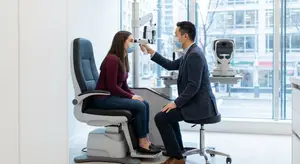
Why Glaucoma Is Hard to Catch on Your Own
The most common type, primary open-angle glaucoma, has no symptoms in its early stages. Intraocular pressure can be elevated for years without any discomfort. The peripheral vision loss that follows is so gradual that most people adapt to it without noticing. By the time central vision is affected, a meaningful amount of nerve fiber is already gone.
That is why evaluating matters. A brief pressure check and an OCT image of the optic nerve can identify structural changes before you notice anything wrong. If you have a family history of glaucoma, tell us at check-in. It is one of the strongest risk factors and affects the frequency we recommend for monitoring.
What Glaucoma Evaluation Includes at Sparks Eye Care
- Intraocular pressure measurement (tonometry) at every exam.
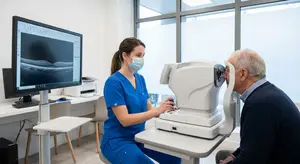
- OCT imaging of the optic nerve fiber layer to detect thinning before vision loss begins.
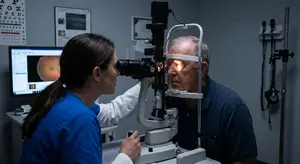
- Optic nerve evaluation with slit lamp and dilated exam.
- Visual field testing to map peripheral vision when indicated.
- Pachymetry (corneal thickness) when pressure readings need context.
- Gonioscopy to assess the drainage angle for narrow-angle glaucoma.
- Baseline documentation for year-over-year comparison.
- Review of all findings with a plain-language explanation of what they mean.
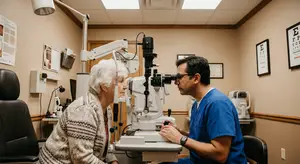
How Often Should At-Risk Patients Be Monitored for Glaucoma?
If your exam is normal and you have no risk factors, annual screening is standard. If you have elevated pressure, a suspicious optic nerve, a family history of glaucoma, or other risk factors such as high myopia or a thin cornea, Dr. Sparks may recommend more frequent visits, often every 6 months. The goal is to catch any changes early enough that treatment can preserve the vision you have.
OCT Imaging of the Optic Nerve
Optical coherence tomography (OCT) maps the thickness of the retinal nerve fiber layer around the optic nerve. Thinning in that layer is an early marker of glaucoma, often detectable a year or more before visual-field changes appear.

Visual-Field Testing
A visual-field test maps your peripheral vision by asking you to respond to small lights at different locations in your field of view. It is the primary tool for detecting and tracking functional vision loss from glaucoma. Dr. Sparks orders it when the optic nerve or pressure warrants a closer look.
Co-Management With Glaucoma Specialists
Most glaucoma patients are managed with eye drops that lower intraocular pressure. Dr. Sparks prescribes and monitors medication here in the eye clinic. When a patient needs laser treatment (SLT) or surgery (trabeculectomy, MIGS), she coordinates with a trusted glaucoma specialist and then provides ongoing follow-up care back at Sparks Eye Care. You do not have to navigate that transition on your own.
If you have already been diagnosed with glaucoma at another practice and are looking for a local provider to continue your care, Dr. Sparks is happy to serve as your managing optometrist. Bring your previous records and imaging when you come in.

Related Services at Sparks Eye Care
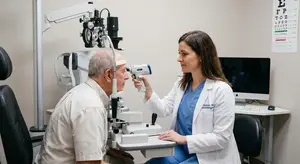
Glaucoma screening is included in every comprehensive exam. A full eye health visit covers pressure, optic nerve, retinal imaging, and more.
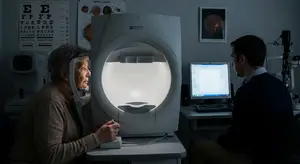
Like glaucoma, macular degeneration can progress quietly. Dr. Sparks monitors at-risk patients with OCT imaging and co-manages with retinal specialists when needed.

Find our address, hours, and contact information so you can schedule your next visit.
Questions About Glaucoma From Andover Patients
Glaucoma is a group of conditions that damage the optic nerve, usually because of elevated intraocular pressure. Risk factors include a family history of glaucoma, age over 60, elevated pressure, thin corneas, high myopia, and certain ethnic backgrounds. Many people have no idea they are at risk until an exam reveals a problem.
Not in the early stages. Primary open-angle glaucoma, the most common type, has no pain and no visible changes until peripheral vision is already reduced. That is why routine evaluating is the only reliable way to catch it early.
Not cured, but it can be controlled. Damage that has already occurred is permanent, but treatment with eye drops, laser, or surgery can halt or slow further progression. The earlier treatment begins, the more vision can be preserved.
Most patients are managed with prescription eye drops. When drops are not enough, laser treatment (selective laser trabeculoplasty, or SLT) is often tried before surgery. Dr. Sparks co-manages surgical cases with a glaucoma specialist and handles your follow-up care here in Andover.
With a combination of intraocular pressure checks, OCT imaging of the optic nerve, and periodic visual-field tests. How often you come in depends on your risk level and how stable things look. Dr. Sparks will give you a specific monitoring schedule based on your exam findings.
Protect the Vision You Have
Glaucoma caught early is manageable. Our Andover eye doctor screens every patient at Sparks Eye Care in Andover and monitors those at risk closely. Schedule your glaucoma check today.