

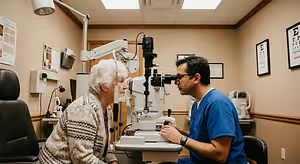
You sit down for your eye exam, look straight ahead, and feel a quick puff of air against your eye. A moment later, your eye doctor mentions a number. Maybe it's 14. Maybe it's 19. You nod along, but what does that number actually mean, and should you be concerned about it?
That number measures the pressure inside your eye, and it plays an important role in checking for glaucoma, a condition that can gradually damage your optic nerve. While eye pressure is an important part of glaucoma screening, understanding your results requires looking at several aspects of your eye health.
At Sparks Eye Care, LLC in Andover, KS, Dr. Rebecca Sparks believes patients deserve to understand their test results. Knowing what your eye pressure reading means can help you make informed decisions about your vision and long-term eye health.
What Does a Glaucoma Eye Pressure Test Measure?
Your eyes contain a clear fluid called aqueous humor, which helps nourish the structures inside your eye and maintain its shape. Your body constantly produces and drains this fluid, creating a natural balance that helps regulate pressure.
A glaucoma eye pressure test measures this pressure, known as intraocular pressure (IOP), in millimeters of mercury (mmHg). Your optometrist uses an instrument called a tonometer to take the measurement, often through a gentle puff of air or a brief touch against the eye's surface.
For most adults, typical eye pressure falls between 10 and 21 mmHg. A reading above 21 may indicate elevated pressure, while a lower reading may be perfectly healthy depending on your individual circumstances.
However, a number within the normal range tells only part of the story. Your optic nerve health, corneal thickness, medical history, and previous examination results all help determine what that reading means for you.
Can You Have Glaucoma With Normal Eye Pressure?
Yes. Some people develop glaucoma even when their eye pressure stays within the typical range. This condition, called normal-tension glaucoma, causes gradual optic nerve damage despite pressure readings that appear healthy.
Other patients have consistently elevated eye pressure without developing glaucoma. Doctors call this ocular hypertension, and while it increases the risk of glaucoma, it does not automatically mean optic nerve damage has occurred.
This is why Dr. Sparks evaluates more than your pressure reading during a comprehensive eye exam. She examines the optic nerve and uses advanced diagnostic technology to identify changes that may indicate glaucoma.
Why Does Eye Pressure Change Between Exams?
Eye pressure naturally fluctuates throughout the day, sometimes reading higher in the morning and lower later. Certain medications, corneal thickness, and changes in fluid drainage can also influence measurements.
Rather than treating one reading as a final answer, Dr. Sparks compares your results over time. This helps her identify patterns, assess your individual risk, and recommend further testing when appropriate.
What Are the Main Glaucoma Risk Factors?
Glaucoma can affect people of all ages, although certain factors increase the likelihood of developing the condition. These include a family history of glaucoma, increasing age, elevated intraocular pressure, significant nearsightedness, and thinner corneas.
Some medical conditions, including diabetes, may also influence glaucoma risk.
Because glaucoma often develops gradually, many patients experience changes in peripheral vision before recognizing that anything has changed. Regular examinations allow your optometrist to identify potential concerns while treatment can still help preserve your sight.
How Does Dr. Sparks Check for Glaucoma?
A glaucoma eye pressure test is one part of a thorough evaluation. At Sparks Eye Care, LLC, Dr. Sparks combines pressure measurements with advanced testing to assess optic nerve health and monitor changes over time.
OCT Imaging and Optic Nerve Damage
Optical coherence tomography (OCT) produces detailed images of the retina and optic nerve, allowing Dr. Sparks to measure the thickness of the nerve fiber layer. Thinning in this tissue can indicate early glaucoma-related damage, sometimes before noticeable vision changes develop.
By comparing OCT images from different appointments, she can identify subtle changes and determine whether additional monitoring or treatment may be necessary.
Visual Field Testing
Glaucoma frequently affects peripheral vision first, making visual field testing another valuable diagnostic tool. During this examination, you'll look straight ahead and respond when small lights appear in different areas of your vision.
The results help Dr. Sparks identify areas of reduced visual sensitivity and monitor whether changes occur over time. She may also recommend corneal thickness measurements or additional testing to develop a clearer understanding of your glaucoma risk.
How Often Should You Have Your Eye Pressure Checked?
Your recommended examination schedule depends on your age, medical history, previous eye pressure readings, and individual risk factors.
For patients with healthy eyes, regular comprehensive examinations provide an opportunity to monitor pressure and optic nerve health. Those with elevated pressure, a family history of glaucoma, or suspicious findings may benefit from more frequent visits, sometimes every six months.
At Sparks Eye Care, LLC, Dr. Sparks recommends a monitoring schedule based on your individual needs and explains what your results mean along the way.
Schedule a Glaucoma Eye Pressure Test in Andover, KS
Your eye pressure reading is a useful piece of information, but its real value comes from understanding how it relates to your overall eye health. Regular glaucoma screening helps identify changes early and gives your optometrist the information needed to protect your vision over time.
At Sparks Eye Care, LLC, Dr. Rebecca Sparks brings more than 30 years of experience to every examination, combining careful testing with the personal attention patients have come to expect from our independent Andover practice.
Schedule your comprehensive eye exam at Sparks Eye Care, LLC, located at 307 W Highway 54, Suite 100, Andover, KS, or call (316) 869-0765 to arrange you