

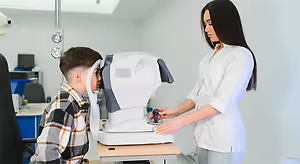
School vision screenings can catch signs that a child may have trouble seeing clearly. A comprehensive pediatric eye exam takes a closer look at vision, eye health, focusing, tracking, alignment, and more.
A note comes home from school saying your child passed their vision screening. Good news. But there is more to the story.
A typical school vision screening may take around two minutes, while a comprehensive eye exam in our office takes closer to 20 minutes, depending on the child and the testing they need. Those extra minutes give Dr. Rebecca Sparks time to look beyond whether your child can identify letters or pictures from across a room. School screenings have a purpose, and comprehensive eye exams have a different one. Knowing what each can tell you helps Andover parents get a fuller picture of their children’s vision.
What Does a School Vision Screening Check?
A school vision screening is exactly what its name says: a screening. Its job is to quickly identify children who may benefit from further evaluation. In a school filled with students, speed matters, so screenings commonly focus on visual acuity, or how clearly a child can see at a set distance.
If your child has trouble identifying the expected letters, numbers, or symbols, the screening may flag them for follow-up with an eye doctor. That makes screenings useful because they can identify possible concerns in children whose families may have seen few clues at home.
Passing one gives parents information about the skills screened that day. A comprehensive pediatric eye exam builds on that information by looking more closely at how your child’s eyes see, work together, and develop.
What Happens During a Pediatric Eye Exam?
At Sparks Eye Care, LLC in Andover, Dr. Sparks adapts testing to the child sitting in her exam chair. A preschooler and a high school student have different visual needs, so their exams can look different, too.
Depending on your child’s age and needs, an exam may include:
- Age-appropriate visual acuity testing
- Eye alignment and cover testing
- Eye tracking
- Retinoscopy to measure prescription
- Depth perception and color vision screening
- An examination of the front of the eyes
- Retinal and optic nerve assessment
- Retinal imaging when appropriate
- Dilation when indicated
Younger children also need zero talent for reading tiny letters to have their eyes examined. Dr. Sparks can use picture-based and objective tests that require little or no verbal feedback, which means children can receive meaningful eye care well before they become confident readers.
That broader approach is where the difference between a quick screening and an in-office exam becomes clearer.
Why Does a 20-Minute Eye Exam Matter?
The difference between two minutes and 20 minutes is less about the clock and more about what can happen during that time. A screening needs to move quickly, while an in-office comprehensive eye exam gives Dr. Sparks time to examine several parts of your child’s visual system, review their health and vision history, and talk with you about what you have noticed at home or school.
Maybe your child squints at the television, or reading leaves them with a headache. Perhaps they hold books close to their face, lose their place on the page, or have started asking to sit closer to the front of the classroom. Those details belong in the conversation because they can add useful context to what Dr. Sparks finds during the exam.
She also watches for concerns such as amblyopia, commonly called lazy eye, and strabismus, where the eyes have trouble staying properly aligned. If an exam points toward a tracking or eye-teaming concern that may benefit from vision therapy, she can refer your child to an appropriate provider.
Can Kids Have Vision Problems Without Knowing?
Yes. Children have no previous version of their vision to compare against. If the classroom board has always looked a little blurry, they may assume that is simply how the board looks. If reading takes extra effort, they may lack the words to explain what feels difficult.
That makes the things parents notice especially useful. Squinting, sitting close to screens, frequent eye rubbing, headaches after reading, or holding books unusually close can all be reasons to arrange an exam sooner. Changes at school can offer clues as well. If your child suddenly struggles to see information across the classroom or mentions tired eyes during homework, share those observations with Dr. Sparks.
One common reason for these changes is myopia, or nearsightedness, which often develops during childhood.
Can a School Screening Detect Myopia?
A school screening may flag blurry distance vision associated with myopia. A comprehensive eye exam can then measure your child’s prescription and track how their vision changes over time.
Myopia commonly develops during childhood and may progress throughout the school years. Parents might notice a child moving closer to the television, squinting at distant signs, or struggling to see the classroom board. When a child’s prescription continues to change, Dr. Sparks can monitor their vision and discuss myopia management when appropriate.
Sparks Eye Care, LLC offers MiSight® 1 day contact lenses for myopia management. These daily soft contact lenses provide vision correction while helping slow myopia progression in children who are appropriate candidates. A comprehensive eye exam gives Dr. Sparks the clinical information needed to discuss whether this approach fits your child.
When Should Your Child See an Eye Doctor?
A failed school screening is one reason to make an appointment, while your child’s age, symptoms, family history, and previous eye health can also guide the timing of care.
Dr. Sparks generally recommends a first routine eye exam around ages three to five, before school begins. She also sees infants and toddlers when parents, pediatricians, or family history raise a specific concern. School-age children should receive regular eye exams, with more frequent visits when they have a known vision condition or participate in myopia management.
Parents know their children’s habits better than anyone. If something about the way your child reads, watches television, completes homework, or sees at a distance changes, an eye exam can help you find out what is happening.
Pediatric Eye Exams in Andover, KS
School vision screenings and comprehensive eye exams serve different purposes. A quick screening can identify certain concerns and point families toward further care. A comprehensive exam gives an eye doctor more time to examine your child’s vision, eye health, prescription, and visual development as a whole.
At Sparks Eye Care, LLC, Dr. Rebecca Sparks has cared for families in the Wichita area for more than 30 years. She sees children from infancy through high school and takes time to explain her findings to parents in plain language. If your child needs glasses, contact lenses, myopia management, additional monitoring, or a referral for vision therapy, you will leave knowing what comes next.
And when your child comes back, they see Dr. Sparks again. Same doctor. Same practice. A familiar face who already knows their eyes.
If your child passed a school screening, keep that good news. Then give the rest of their vision the attention it deserves. Book your child’s eye exam at Sparks Eye Care, LLC in Andover, Kansas, or view our hours and location to plan your visit.